
Contact with the wound surface
Many physical wound dressings are only suitable for wounds on flat surfaces. They may not enable full surface contact with wounds near joints, on highly contoured areas, or with deep or tunneling wounds.5–8
Understanding the practical challenges of treating chronic wounds.
There are many options currently available for treating chronic wounds following significant advances in technology in recent years. However, there are still many challenges in successfully treating these wounds.
Many physical wound dressings are only suitable for wounds on flat surfaces. They may not enable full surface contact with wounds near joints, on highly contoured areas, or with deep or tunneling wounds.5–8
The adhesive parts of physical dressings have been shown to cause allergic reactions that can lead to delays or complications in wound healing.5–8
Physical dressings can also limit mobility, restricting movement and affecting daily activities and quality of life.5–8
The properties of these dressings may not be ideal for application at home. Additional nursing care may be needed for their application and maintenance.9
An ideal wound care product should be flexible, gas-permeable, transparent and easy to apply on all wound surfaces. It should also support the moist wound healing, prevent infection and reduce side effects.10
Learn about StrataGRT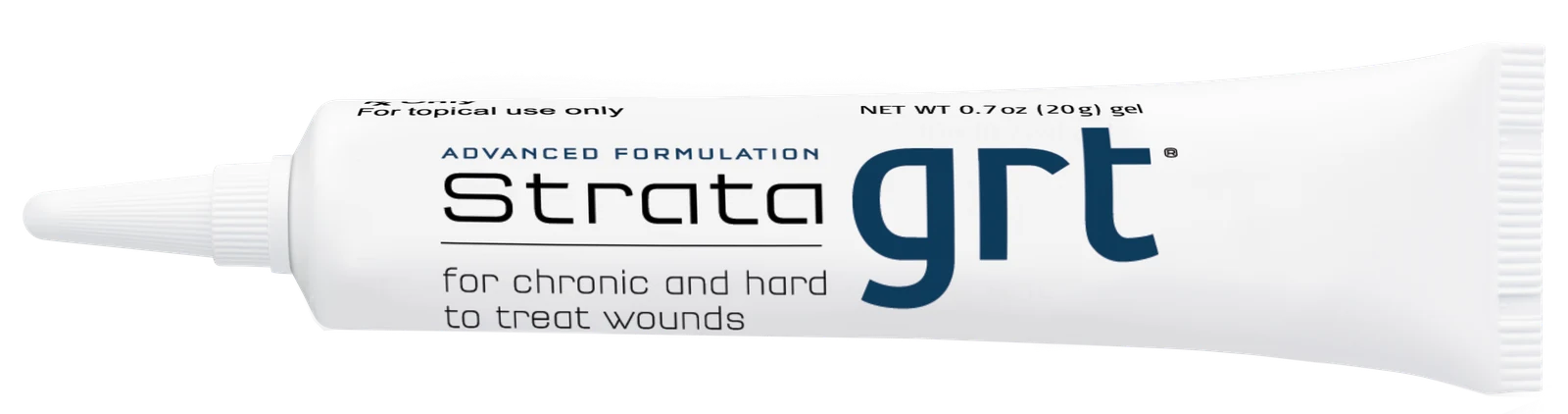
Contact us for prescription and availability information.